Let me cut right to the chase here—one of the most common questions I get from plumbers, construction managers, and industrial maintenance teams when they reach out to our thermoplastic hose supply team is this: “Can your thermoplastic hoses actually handle hot water applications?” I get it, because for decades, rubber hoses and metal pipes have been the go-to for moving hot water, and thermoplastics had a reputation for being flimsy, temperature-sensitive, or just plain unreliable in high-heat settings. But after 12 years of testing, supplying, and troubleshooting hoses for everything from small residential water heaters to large municipal processing facilities, I’m here to tell you that the answer isn’t a simple yes or no—it’s a nuanced one, and getting it right could save you thousands in repairs, downtime, and replacement costs. Thermoplastic Hose

First, let’s break down what makes a hose suitable for hot water use, because not all thermoplastic hoses are created equal. When a plumber comes to me saying they need a hose for a hot water heater bypass, or a facility manager needs to move 180°F process water through a loading dock piping system, the first thing I ask is two things: What’s the actual operating temperature (not the maximum printed on a box) and what’s the pressure? Because thermoplastics, unlike rubber, have consistent molecular structures that directly dictate their temperature tolerance, and that’s where a lot of misinformation creeps in. For example, many off-the-shelf PVC hoses (polyvinyl chloride) have a maximum temperature rating of 140°F—so they can handle hot tap water, but not the 180°F water common in industrial process lines or water heater recirculation systems. But our polyethylene (PEX) hoses, a type of thermoplastic, have a continuous operating temperature rating of up to 200°F, and our cross-linked polyethylene (XLPE) hoses go even higher—up to 230°F for long-term use. That’s a game-changer for many hot water applications where rubber hoses would start to degrade, crack, or leach chemicals after just a few months.
Wait, let’s talk about that leaching thing because it’s a big one for hot water applications, especially residential or potable water. I’ve had a customer call us last year panicking because their old rubber hot water hose was leaving a weird taste in their kitchen sink. Turns out, natural rubber breaks down in prolonged high heat, releasing volatile organic compounds (VOCs) that can make water taste off, and some cheaper rubber compounds even leach microplastics over time. Thermoplastic hoses, on the other hand—specifically those rated for potable water use—are engineered to be inert. Our NSF/ANSI 61-certified thermoplastic hoses, for example, are tested to ensure they don’t leach any harmful chemicals into hot or cold potable water, even at sustained temperatures of 180°F. That’s why more and more plumbers are switching from rubber to our thermoplastic hoses for under-sink connections, hot water line extensions, and even whole-house recirculation systems. I’ve had one residential client tell me they replaced 12 rubber hoses in their home’s hot water system and haven’t had a taste issue in over a year, which is a massive win over rubber alternatives.
But here’s the catch: temperature isn’t the only factor. You also have to account for pressure and exposure time. A lot of people see a “maximum temperature” rating on a thermoplastic hose and assume it works for every hot water application, but that’s not true. For example, our standard XLPE hose has a maximum temperature of 230°F at 100 psi, but if you’re working with higher pressure—say 150 psi—that maximum temperature drops to 180°F, which is exactly the temperature of most residential hot water systems. That’s why, when a customer reaches out to us, I don’t just quote a hose and send it their way—I ask for the operating temperature, pressure, flow rate, and whether the water is potable or has additives (like glycol, which is common in radiant heating systems) to make sure we get the right product. Last month, we had a manufacturing plant that was using a rubber hose for their radiant floor heating system that kept bursting every three months. They switched to our thermoplastic hose rated for 190°F at 120 psi, and it’s been over 18 months with zero issues. That’s the kind of reliability we pride ourselves on, and it’s all because we don’t just sell a product—we match the right hose to the right application.
Another common misconception is that thermoplastic hoses are less durable than metal or rubber. I get that—if you’ve ever dragged a cheap plastic hose across a garage floor, it’ll crack, right? But commercial-grade thermoplastic hoses are reinforced with things like polyester braiding or steel wire, which give them flexibility and strength similar to rubber, while being lighter and more corrosion-resistant than metal. For hot water applications, corrosion is a huge issue—metal pipes and hoses can develop rust, scale, and pinholes over time, especially if the water has high mineral content. I had a municipal works team reach out to us two years ago because their steel hot water hoses were developing leak after leak in their street maintenance trucks, where they use hot water to clear ice and debris. Switched to our reinforced thermoplastic hoses, and they’ve only had to replace one in two years—compared to replacing four metal hoses every six months. That’s a huge cost savings right there, not to mention less downtime for their trucks.
What about high-temperature industrial hot water applications, like those found in food and beverage processing, or pharmaceutical manufacturing? That’s another area where thermoplastic hoses are really shining. Many food and beverage facilities use hot water for CIP (clean-in-place) cycles, which can reach temperatures up to 250°F, and they need hoses that can handle prolonged exposure to that high heat, plus be easily sanitized. Our PTFE (polytetrafluoroethylene) thermoplastic hoses are rated for continuous use up to 500°F, and they’re chemically inert, so they don’t absorb food residues or allow bacteria to grow. A craft brewery in the Pacific Northwest switched from rubber hoses for their wort transfer and cleaning lines, and they told us that not only did the thermoplastic hoses stand up to the high-temperature CIP cycles, but they were way easier to clean and didn’t hold onto the odors that rubber hoses do. That’s a big deal for food and beverage, where sanitation is non-negotiable.
But wait, I need to be honest here—thermoplastic hoses aren’t the right choice for every hot water application. For example, if you’re dealing with water that’s over 300°F and extremely high pressure (like in some industrial boiler systems), metal hoses or high-temperature rubber compounds might be a better fit. Also, thermoplastics can become brittle in extremely cold temperatures, so if your application involves both hot water and being exposed to freezing conditions, you need to make sure you get a thermoplastic hose that’s engineered for both temperature ranges. We always make sure to disclose those limitations to our customers, because we don’t want to sell something that’s going to fail them. Last quarter, a customer reached out asking for a hose for a 320°F water application, and we told them our thermoplastic hoses max out at 250°F, and recommended a high-temperature stainless steel hose instead—they came back a month later and thanked us, because they had originally ordered a thermoplastic hose from another supplier that would have failed within a week.
So, putting it all together: yes, thermoplastic hoses can absolutely be used for hot water applications—but only if you pick the right type of thermoplastic hose for your specific temperature, pressure, and use case. The days of writing off thermoplastics as “too flimsy” for hot water are long gone; modern thermoplastic hose technology has come a long way, with NSF-certified options for potable water, high-temperature options for industrial and food use, reinforced designs that match the durability of rubber, and the added benefits of being lightweight, corrosion-resistant, and leak-proof for longer periods than traditional alternatives.
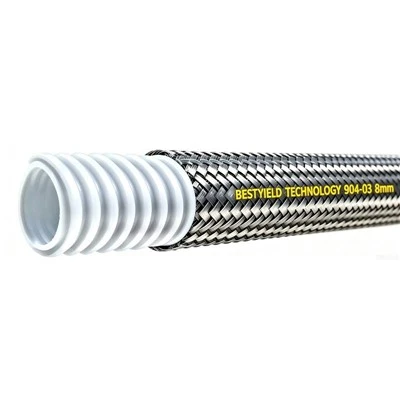
If you’re tired of replacing failing rubber or metal hoses in your hot water system, or you’re planning a new installation and want something reliable, long-lasting, and safe for potable or industrial use, we’re here to help. We don’t do one-size-fits-all hoses—we take the time to ask the right questions about your specific application, guide you to the right product, and provide support every step of the way. Whether you’re a plumber working on residential hot water lines, a facility manager handling industrial process water, or a food and beverage operator needing sanitary hoses for cleaning cycles, we’ve got thermoplastic hoses built to stand up to your hot water needs. Reach out to our team to learn more about our product lines, get a custom quote, or ask any questions about which hose is right for you.
PTFE Tube References
- National Sanitation Foundation (NSF). (2022). NSF/ANSI Standard 61: Drinking Water System Components – Health Effects.
- American Society for Testing and Materials (ASTM). (2021). ASTM D2729: Standard Specification for Poly(Vinyl Chloride) (PVC) Plastic Pipe, Schedules 40, 80, and 120.
- International Society of Automation (ISA). (2020). ISA-75.01.01: Control Valve – Sizing Equations for Fluid Flow Under Saturated Conditions.
- Thermoplastic Hose and Fitting Association (THFA). (2023). Thermoplastic Hose Application Guide for Hot Water and Process Fluid Transfer.
BESTYIELD Technology (Huizhou) Co., Ltd.
BESTYIELD Technology (Huizhou) Co., Ltd. is one of the most professional thermoplastic hose manufacturers and suppliers in China, featured by quality products and good price. Please rest assured to buy durable thermoplastic hose made in China here and get quotation from our factory. Customized orders are welcome.
Address: Yinshan Industrial Zone, Liangjing Town, Huiyang District, Huizhou City, Guangdong Province
E-mail: rick@bestyield.net
WebSite: https://www.bestyield.org/
