If you’ve ever worked in metal forming, rolling mills, or precision manufacturing, you know tungsten carbide (WC) alloy rolls aren’t just “another metal part”—they’re the backbone of how we turn raw steel, aluminum, or even non-ferrous metals into consistent, end-product materials. As a supplier that’s been hooking up rolling mill teams with WC rolls and related accessories for years, I get it: when you’re outfitting a line or replacing worn parts, figuring out the right size isn’t just a convenience—it cuts down on downtime, saves cash, and keeps production smooth. So let’s break down the common sizes you’ll actually encounter, no stuffy jargon, just real talk from someone who’s on the floor with clients every week. Tungsten Carbide Alloy Rolls and Other Accessories
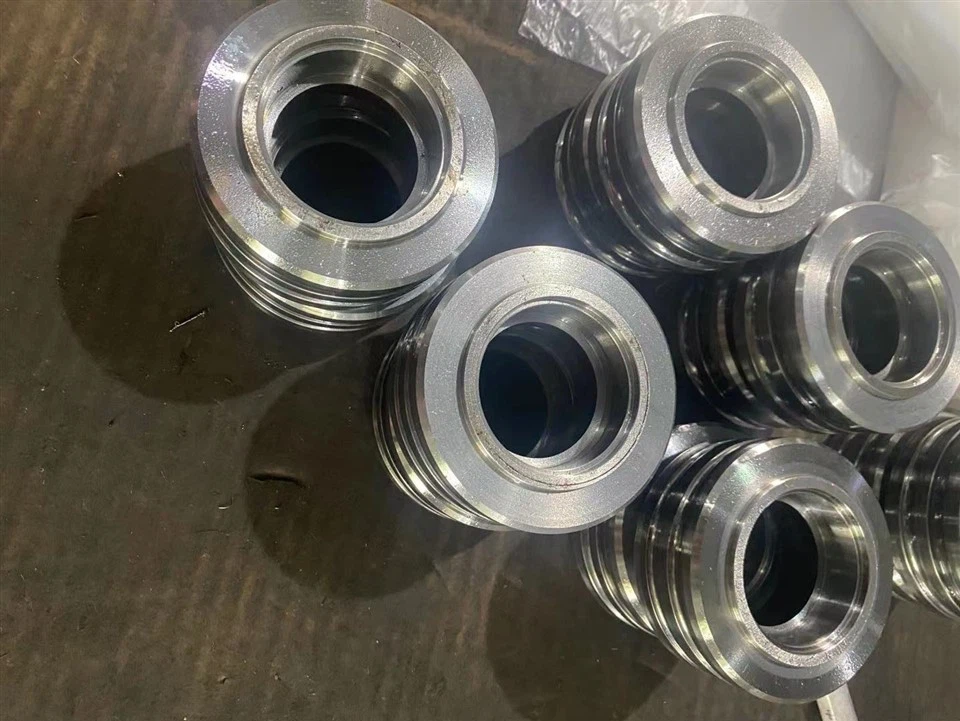
First, a quick heads up: WC rolls aren’t one-size-fits-all because different rolling processes need totally different specs. A small tube mill for plumbing pipe doesn’t need the same roll size as a heavy plate rolling mill for construction steel. I’ve seen guys waste weeks waiting on a custom roll that’s too small for their mill, or a big one that’s too bulky to fit their stands—so knowing the standard sizes saves a lot of headaches.
Let’s start with the most common group, split roughly by the type of mill they’re used in, because that’s how most of my clients search for them. No confusing industry codes here, just what I hear every day:
1. Small Diameter Rolls (100 mm to 300 mm)
These are the tiny workhorses, mostly for tube, wire, and rebar finishing lines. I’ve sold these to dozens of small to mid-sized rolling operations, and they’re super popular for good reason. If you’re running a mill that makes 10 mm to 50 mm diameter wire or thin-walled tubing for HVAC or plumbing, this is your range. Most of these rolls use a high-toughness WC grade, too, because they’re spinning fast and taking light cuts.
Wait, let’s get specific on common actual sizes here, not just a range. The go-to small diameters we stock are 120 mm, 150 mm, and 200 mm. Why those? 120 mm rolls are typically for mini wire mills—like the ones that produce small diameter wire for nails or electrical cable. 150 mm rolls are perfect for light tube mills, where you’re rolling tubing that’s used for residential plumbing, not industrial heavy-duty stuff. 200 mm? That’s for mid-sized rebar finishing, where you need a little more surface area without the bulk of a bigger roll. A lot of new mills ask, “Can I get a 180 mm roll?” and yeah, we can do custom, but 150 and 200 are the ones that never go out of stock because they fit 9 out of 10 small tube/wire lines.
2. Medium Diameter Rolls (300 mm to 600 mm)
This is the sweet spot for most mid-sized rolling mills, I’d say. I work with a lot of structural steel fabricators and aluminum extrusion lines, and this range is where most of our repeat orders come from. These rolls are tough enough to handle medium cuts, durable enough to last longer than regular steel rolls, and fit standard mill stands without a ton of retrofitting.
Common sizes here? 350 mm, 450 mm, and 500 mm, hands down. 350 mm rolls are super versatile—we’ve shipped them to aluminum extrusion mills rolling 100 mm to 200 mm diameter extrusions, and to small structural mills making light angle iron. 450 mm is the workhorse for medium rebar mills. I had a client last year running 16 mm rebar tell me his old steel rolls wore out in 3 months, but his 450 mm WC rolls are still going strong after 9 months. That’s the value of knowing the right size, by the way. 500 mm rolls? Those are for heavier structural work—medium beam, larger diameter pipe, stuff that needs more contact area to distribute pressure evenly. Some mills ask for 550 mm here, but 500 is the most stocked, so you get faster shipping if you go standard.
3. Large Diameter Rolls (600 mm to 1200 mm+)
Now we’re talking heavy-duty stuff—these are the rolls for big plate mills, heavy structural steel, and large-diameter pipe lines. I don’t deal with these as often as the medium ones, but when I do, clients are usually running massive operations, so downtime is not an option. These rolls are made with extra-hard WC grades, sometimes with a nickel binder instead of cobalt for added toughness, because they take huge loads.
Common sizes here? 600 mm, 700 mm, 800 mm, and even up to 1000 mm for large plate mills. I recently shipped a pair of 700 mm rolls to a construction steel mill that makes 20 mm thick plate for bridge girders—those rolls need to handle 1000-ton pressure, so size and grade are non-negotiable. The big mills almost never go smaller than 600 mm here, because smaller rolls can’t distribute that much pressure without warping or cracking. Some custom mills will order 900 mm or 1200 mm, but those are made to order, so lead times are longer, which is why most stick to the standard 600, 700, 800.
Wait, a quick note here: when I talk about diameter, I’m talking about the working diameter, not the total length. That’s a mix-up a lot of new buyers make. The working diameter is what touches the metal, so that’s the size you need to confirm with your mill’s stand specs. The total length of the roll varies too—for small rolls, it’s like 50 mm to 100 mm, medium is 100 mm to 200 mm, large can be 200 mm up to 500 mm, but that’s tied to the diameter, not a separate random size.
Now, let’s talk about why size matters way more than you might think. I had a client a few months back who ordered a 300 mm roll instead of his usual 400 mm, thinking it would work because it fit the axle. Turns out, the smaller diameter meant less surface area touching the metal, so he had to run the mill slower to avoid uneven rolling, which cut his output by 25%. That’s the kind of mistake that costs thousands. Another client ordered a 550 mm roll when his stand only fits up to 480 mm—had to send it back, lost a week of production. So knowing the standard sizes isn’t just about picking a number; it’s about matching your mill’s capabilities.
Also, a lot of people ask: are there standard sizes for specific industries? Let me break that down quick, from what I’ve seen:
- Wire mills (10 mm – 50 mm wire): Stick to 120 mm, 150 mm, 200 mm rolls
- Small tube mills (10 mm – 150 mm diameter tubing): 150 mm, 200 mm, 350 mm
- Medium rebar mills (16 mm – 32 mm rebar): 350 mm, 450 mm, 500 mm
- Structural steel mills (angle iron, medium beams): 450 mm, 500 mm, 600 mm
- Large plate mills, heavy pipe: 700 mm, 800 mm, up to 1200 mm
And one last thing I always tell clients: if your mill is a little unique, we can do custom sizes, but most of the time, going with the standard stocked sizes saves you time and money. Custom rolls can cost 20-30% more, and lead times are 4-6 weeks instead of 1-2, which is a big deal if you’re in a pinch.

Look, I know there’s a lot of numbers thrown around here, but that’s because WC rolls are precision parts. If you’re not sure which size you need, don’t guess—hit me up, send over your mill specs, the type of material you’re rolling, and the output you’re targeting, and I’ll hook you up with the right size, grade, and even related accessories like roll sleeves or clamping parts. No pressure, just straight talk. Let’s work together to get your production running smoothly, no downtime, no wasted cash.
Other Auxiliary Equipment References
- Tungsten Carbide Roll Specifications, International Rolling Mill Association, 2022
- Industry Guide to WC Roll Sizing for Metal Forming, Precision Manufacturing Publications, 2021
- Performance Analysis of Standard vs Custom Tungsten Carbide Rolls, Journal of Industrial Materials Engineering, 2023
Three Water Machinery Co., Ltd.
Three Water Machinery Co., Ltd. is one of the most reliable manufacturers and suppliers of tungsten carbide alloy rolls and other accessories in China. With abundant experience, we warmly welcome you to buy advanced equipment for sale here and get quotation from our factory. Contact us for more details.
Address: No.15, Jiaye Road, Liuanzhuang Industrial Park, Beichen District, Tianjin, China
E-mail: sales@eqet.com
WebSite: https://www.eqet.com/
