If you’ve ever stood in front of a high-security bank lobby, a government building’s entryway, or even a boutique luxury store’s front window, you’ve probably wondered about that thick, hazy glass that looks solid enough to stop anything. As someone who’s spent 12 years as an architectural bulletproof glass supplier, I get this question all the time: “What is the weight of bulletproof glass for architecture?” The answer isn’t as simple as a single number—it ties to ballistic rating, layer structure, application, and even the type of threat the glass is designed to stop. I’ve worked on projects from urban hospitals to suburban embassy annexes, and the weight of each panel is a decision that balances safety, structural integrity, and client needs. Let me break down what goes into that number, how we calculate it, and why it matters for every build. Bulletproof Glass for Architecture

First, it’s critical to start with the basics: architectural bulletproof glass isn’t a single material. It’s a laminated composite made of alternating layers of tempered glass and polycarbonate (a tough, shatter-resistant plastic core), sometimes with additional interlayers or glass tiles for higher ratings. Each layer adds both thickness and weight, and the ballistic rating is the biggest driver here. The US National Institute of Justice (NIJ) sets the standard for ballistic resistance, with ratings from Level I (stopping small.22 caliber bullets fired from close range) up to Level IV (stopping armor-piercing rifle rounds). For architectural projects, we rarely work below NIJ Level III, which stops 7.62mm rounds—this is the baseline for banks, schools, and government facilities.
The weight starts with monolithic tempered glass, which is what architectural teams know well: a ¼-inch (6mm) pane of standard float glass weighs roughly 3.37 pounds per square foot (psf). Tempered glass is about 25% heavier than standard float glass, so that same ¼-inch tempered pane is around 4.2 psf. That’s the baseline. Now add the polycarbonate core, which is 50% denser than acrylic but lighter than most glass types—roughly 0.045 pounds per square inch (psi) of thickness. A ½-inch polycarbonate core (common for mid-level ballistic ratings) is about 2.16 psf. Then add another layer of tempered glass on the opposite side, and suddenly you’re looking at a 1.5-inch thick panel: that’s two ¼-inch tempered panes (8.4 psf) plus a ½-inch polycarbonate core (2.16 psf) for a total of ~10.56 psf. For context, that’s three times heavier than a standard ¼-inch architectural window.
But here’s where things get nuanced. Not all architectural bulletproof glass uses polycarbonate. For ultra-high-risk applications like embassy entryways or correctional facilities, some projects use all-glass laminated panels, which include multiple tempered glass layers and a specialized polymer interlayer. These panels are lighter than polycarbonate-core composites but heavier than standard tempered glass. A Level IV all-glass panel, for example, might be 2.25 inches thick and weigh around 17 psf—almost five times the weight of a standard architectural window. For comparison, a standard ¾-inch architectural floor is around 10 psf, so a full Level IV bulletproof window is nearly as heavy as a flooring panel, which is a critical detail for structural engineers.
The next factor is the size of the panel, which is one of the most overlooked variables in weight calculation. A small, 2×2 foot panel for a bank teller window will weigh drastically less than a 10×10 foot panel for a museum exhibit window. Let’s do the math: that same Level III composite panel at ~10.56 psf is 42.24 pounds for a 2×2 foot panel, but it jumps to 1,056 pounds for a 10×10 foot panel. That’s a huge number, and it’s why structural engineering is non-negotiable with this product. A building’s load-bearing walls, window frames, and even the floor beneath a large bulletproof glass installation have to be engineered to support that extra weight—something I always emphasize to architects early in the project, long before we finalize the panel size.
Then there are custom architectural modifications, which can add even more weight. Many of our clients want bulletproof glass that’s also aesthetically seamless—no thick mullions, no visible fasteners, just a sleek, transparent facade. To achieve that, we often use thicker edge treatments, additional internal reinforcing layers, or custom curved panels for curved building facades. For example, a curved bulletproof panel for a high-end shopping mall might have an extra ⅛-inch glass layer to maintain the curve without weakening its ballistic resistance, adding roughly 2.1 psf to the total weight. We also offer fire-resistant bulletproof glass for hospitals, which adds an intumescent interlayer that can increase weight by 10-15%, depending on the fire rating.
I should also address a common myth: more weight doesn’t always mean better ballistic resistance. For a long time, we thought thicker, heavier panels were the only way to stop high-caliber rounds, but advances in interlayer technology have changed that. We now offer a mid-level Level IIIA bulletproof glass that’s 7/8-inch thick and weighs just 7.2 psf—lighter than a lot of solid wood doors used in commercial buildings. This is perfect for applications like boutique storefronts or school classroom windows, where high security is needed but extra weight and bulk would ruin the design. It’s a game-changer for architects, who don’t have to choose between safety and aesthetic lightness.
That said, for the highest-risk projects, weight is non-negotiable. A correctional facility’s window needs to not only stop rifle rounds but also withstand impact from sledgehammers, so those panels are often 3+ inches thick and weigh 20+ psf. I worked on a maximum-security hospital in Chicago a few years back, where we installed Level IV all-glass panels for the psychiatric ward windows. Each panel was 8×12 feet, so the total weight was around 1,920 pounds per panel—enough that the structural team had to reinforce the entire third floor’s steel framing to support the load. We had to coordinate closely with the architect, the structural engineer, and even the general contractor to make sure the window frames and supporting structure were ready for that weight before we delivered the panels.
So, to answer the original question: the weight of architectural bulletproof glass ranges from as low as 5 psf (for thin Level I or IIA panels) up to 22+ psf for ultra-high-risk Level IV panels, with most commercial and institutional projects falling between 8 and 15 psf. But that number is only part of the story—you have to factor in panel size, custom modifications, and site-specific structural needs. As a supplier, my job isn’t just to sell glass; I have to work with architects, structural engineers, and contractors to calculate the exact weight, verify that the building can support it, and adjust the design if needed to meet both safety and design goals.
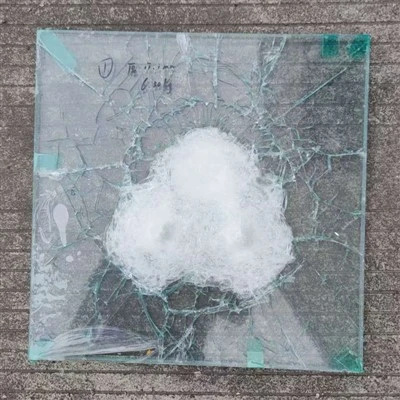
If you’re an architect, builder, or facility manager working on a project that requires bulletproof glass, don’t leave the weight calculation for the end of the process. Early collaboration will save you from costly structural retrofits or design compromises down the line. We work with teams across the country to provide custom calculations, sample panels, and structural guidance from the first sketch to final installation. Whether you need a small bank teller window or a full building facade, we can help you find the right balance of weight, safety, and style. Reach out to start a conversation about your next project.
Bulletproof Glass for Stanag 4569 Standard References:
- United States Department of Justice, National Institute of Justice. Ballistic Resistance of Body Armor, NIJ Standard-0101.06, 2008.
- Glass Association of North America (GANA). Architectural Laminated Glass Design and Installation Guide, 2021.
- International Code Council (ICC). International Building Code (IBC), Section 2308: Glazing Materials, 2024.
- ASTM International. Standard Test Method for Ballistic Resistance of Structural Systems, ASTM F1233-19, 2019.
Shaoxing Transparent Armoring Materials Co., Ltd.
As one of the most professional bulletproof glass for architecture manufacturers and suppliers in China, we’re featured by quality products and good service. Please rest assured to buy durable bulletproof glass for architecture made in China here from our factory. We also accept customized orders.
Address: No.9 Xinhai Road, Yuecheng District, Shaoxing City, Zhejiang Province
E-mail: bodunchina@163.com
WebSite: https://www.king-armor.com/
