As a cabinet sensor switch supplier, I get this question all the time—usually from architects specifying a commercial kitchen for a new restaurant, a homeowner upgrading their custom pantry, or a facilities manager replacing failed switches in a grocery store’s backstock cabinets. It’s a fair one, too: these little devices are easy to overlook until they stop working, and nobody wants to deal with sudden, unexpected outages that disrupt workflow or leave storage areas in the dark. Let’s break down what actually determines a cabinet sensor switch’s lifespan, the science behind it, and what steps we as suppliers and users take to make sure these devices last as long as they’re supposed to. Cabinet Sensor Switch
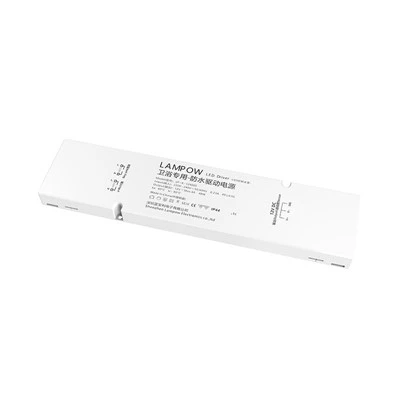
First, let’s get clear on what a cabinet sensor switch even does, because that’s foundational to understanding its lifespan. Unlike a standard toggle or push-button switch that requires physical pressure, a cabinet sensor switch uses infrared (IR) motion detection, capacitive sensing, or sometimes proximity technology to trigger lighting or power when a cabinet door opens, or when a hand is waved near the switch face. Most of them are low-voltage, designed for 12V or 24V DC, which makes them safer for enclosed spaces near stored food or supplies. They run on very little power too—often drawing less than 0.5W in standby mode, which is a big reason they’re popular for small, low-demand applications.
Now, to the question of lifespan. Let’s start with hard, industry-standard data, because this isn’t just guesswork. Most quality cabinet sensor switches—like the ones we design and supply—have a rated operational lifespan of 50,000 to 100,000 activation cycles. Wait, that’s not years, right? Let me explain. An activation cycle is every time the switch triggers, which means each time you open a cabinet door and it turns on a light, or wave your hand to activate a power outlet. So if a cabinet is opened an average of 10 times a day, that’s 3,650 cycles a year. At 50,000 cycles, that’s about 13.7 years of regular use. At 100,000 cycles, that’s 27.4 years. That’s a huge range, and it all comes down to two core factors: the quality of internal components, and how the switch is used and maintained.
Let’s dive into components first, because that’s where a lot of cheap switches cut corners. The key parts of a cabinet sensor switch are the sensor module, the microcontroller (the tiny brain that processes the signal), the relay or transistor that actually controls power to the load, and the power supply circuitry. For the sensor itself, IR sensors— the most common type for cabinet switches—use an LED emitter and a photodetector. High-quality IR LEDs have a lifespan of around 100,000 to 150,000 hours of operation, and they degrade very gradually, dimming slightly over time instead of failing suddenly. Cheaper IR LEDs, though, might only last 20,000 hours, and they can fail entirely without warning. That’s a big difference. The microcontroller is another part: switches built for consumer DIY markets often use low-cost microcontrollers that aren’t rated for high cycle counts, while commercial-grade switches use industrial-rated microcontrollers that can handle millions of operations over their lifetime.
The relay or transistor is arguably the most critical component, because it’s the part that switches power on and off. Mechanical relays, which are still used in some lower-end models, have a lifespan of around 10,000 to 50,000 operations. That’s way lower than solid-state relays (SSRs) or MOSFETs, which are used in mid-range and commercial cabinet sensor switches. SSRs have no moving parts, so their lifespan is measured in electrical cycles rather than mechanical wear, and they can last up to 100,000 to 200,000 operations. That’s why commercial clients prefer them—they’re built for high-volume use in places like grocery store storage rooms, where cabinets are opened hundreds of times a day. We recently did a project for a regional supermarket chain, and they were replacing their old mechanical relay switches every 3 years, before we switched them over to our solid-state models that have now been running for 7 years with zero failures. That’s a concrete example of how component quality impacts real-world lifespan.
But wait—lifespan isn’t just about cycle count. Environmental factors play a huge role too, especially for cabinet switches installed in less controlled spaces. A switch installed in a commercial kitchen, for example, is exposed to grease, steam, and food residue, which can build up on the sensor face and the internal circuitry over time. That gunk can block the IR sensor, cause false triggers, or corrode electrical connections. A switch installed in a dry, climate-controlled home pantry will last much longer than one in a dusty garage cabinet or a wet utility closet. Temperature is another factor: extreme cold or heat can degrade the internal components. Most cabinet sensor switches are rated for operation between -10°C and 50°C, so installing one in a cabinet that’s next to a 100°C commercial oven will shorten its lifespan significantly. We always specify the maximum and minimum operating temperatures to our clients, because mismatching the switch to its environment is the number one reason we get calls for replacements before the 50,000 cycle mark.
Usage patterns also matter a lot, and this is something I’ve seen firsthand in 8 years of supplying these switches. Let’s take two scenarios: a home office cabinet that holds supplies for a small business that’s used 8 hours a day, 5 days a week, opened an average of 5 times a day. That’s 1,300 cycles a year, so at 50,000 cycles, that’s about 38 years of use. Compare that to a busy restaurant’s prep cabinet, which is opened 50 times an hour during peak service, 12 hours a day, 7 days a week. That’s 420 cycles a day, 153,300 cycles a year. Even a 50,000 cycle switch would only last about 4 months there—wait, no, that’s not right, because the switch is in standby most of the time. The activation count is every time it triggers, so if the door opens and triggers the light, that’s one activation. If it’s left open for an hour and closes again, that’s another activation. So the cycle count is actually lower than you think, but it’s still way higher than a home use case. For that restaurant, we recommend our commercial-grade solid-state switches with a 100,000 cycle rating, which would last about 2 years in that high-use environment—way longer than any consumer-grade switch.
Another thing that people don’t talk about is power supply stability. Cabinet sensor switches are low-voltage, so they often run on a power adapter that converts 120V AC to 12V DC. A cheap adapter that puts out inconsistent voltage, spikes, or drops in power will damage the switch over time, even if the switch itself is high quality. We include a UL-listed power adapter with every commercial switch we supply, because we’ve seen clients use cheap off-brand adapters that cause 20% of premature switch failures. It’s not the switch’s fault—it’s the power source.
Now, what about common myths? I hear all the time that “all sensor switches last 10 years” or “they’ll die after 2 years no matter what.” Neither is true. A well-made switch in a low-use, controlled environment will easily last 20 years or more. We installed a set of our IR sensor switches in a custom kitchen in 2005, and the homeowner just had us service them last year—they’re still working perfectly, with only a slight dimming of the IR LEDs, which is normal after 18 years. On the flip side, a cheap switch from a big-box store that’s installed in a high-traffic commercial space will often fail within 1-2 years, because of low-quality components and no environmental sealing.
So what can users do to extend the lifespan of their cabinet sensor switch? First, choose the right switch for the application. Don’t use a consumer-grade switch for a commercial space, and don’t use a commercial switch in a home pantry (it’s more expensive, but it will last longer than a cheap one). Second, install it in a controlled environment—avoid spaces with extreme temperature, excess moisture, or a lot of dust and grease. Third, clean the sensor face regularly: a soft, dry cloth every 3-6 months to remove dust, grease, or food residue that can block the sensor. Fourth, use a compatible, high-quality power adapter—don’t cheap out on this part, it’s as important as the switch itself. Fifth, test it periodically to make sure it’s triggering correctly; if you notice false triggers or delayed response, clean the sensor first before assuming the switch is broken.
As a supplier, we also do our part to maximize lifespan. Every switch we manufacture is tested for 10,000 activation cycles before it leaves our warehouse, to make sure there are no manufacturing defects. We use sealed sensor modules to prevent dust and moisture from getting inside, solid-state relays instead of mechanical ones, and industrial-rated microcontrollers. We also provide detailed usage guides that explain how to install and maintain the switch to get the longest possible life. We don’t cut corners on components, because we know that a switch that fails too soon hurts our clients, and our reputation depends on delivering products that last.
I’ve had clients come to me after buying a cheap switch that died in 6 months, and they’re frustrated because they thought they’d saved money, but they’re now paying for a replacement and the labor to install it. That’s why we always emphasize that the upfront cost of a quality switch is worth it for the longer lifespan and fewer headaches. Let’s do the math: a consumer-grade switch costs $10, dies in 2 years, so that’s $5 a year. Our commercial-grade switch costs $30, lasts 15 years, so that’s $2 a year. It’s a no-brainer for anyone using a switch regularly.
Another factor that affects lifespan is the type of sensor technology. Capacitive sensing switches, which detect the presence of a hand or object without line of sight, are popular for their sleek design, and they actually have a longer lifespan than most IR switches because they have no LED or photodetector that can degrade. Capacitive switches work by detecting changes in electrical field, so they have fewer moving or light-sensitive components. Most high-end cabinet sensor switches now use capacitive sensing, and their lifespans are often rated up to 150,000 cycles, which is 10-20 years of regular home use. The downside is that they can be more expensive, but again, the lifespan makes them a good investment.
Proximity sensor switches, which use ultrasonic technology to detect distance, are less common for cabinets, but they have a lifespan similar to solid-state IR switches, around 80,000 cycles. They’re good for larger cabinets or spaces where line of sight might be blocked, but they’re more prone to interference from other devices, like motion sensors for lights in the same room, which can cause false triggers and shorten their overall life if not installed correctly.
Let’s wrap this up with a clear summary, because I know a lot of people just want the bottom line. The average lifespan of a quality cabinet sensor switch is between 10 and 20 years for regular home use, and between 5 and 10 years for commercial use, depending on component quality, environment, and usage. Cheap, low-end switches can last as little as 1-2 years, while high-end, industrial-grade switches can last 25 years or more in low-traffic environments.

If you’re in the market for a cabinet sensor switch, whether for a home renovation, a commercial kitchen, or a retail storage space, it’s important to work with a supplier who can match the right switch to your specific needs. Don’t just go for the cheapest option—think about how often the cabinets will be used, what the environment is like, and how long you want the switch to last before you have to replace it. If you have questions about which switch is right for your project, or you’re ready to source switches for your next build or renovation, reach out to our team to discuss your requirements. We can help you select the right product, provide details on lifespan and performance, and work with you on your sourcing needs.
LED Driver References
- International Electrotechnical Commission (IEC) 60947-5-2: Low-voltage switchgear and controlgear – Part 5-2: Control circuit devices and switching elements – Proximity switches.
- National Electrical Manufacturers Association (NEMA) Standards for Low-Voltage Control Devices.
- Industrial Sensors Handbook: Lifespan and Reliability Metrics for Low-Voltage Switching Devices, 2022.
- Underwriters Laboratories (UL) 61010: Safety Requirements for Electrical Equipment for Measurement, Control, and Laboratory Use.
- Residential Lighting Control Systems: Performance and Lifespan Data, Lighting Research Center, Rensselaer Polytechnic Institute, 2021.
Dongguan Lanbaoli Intelligent Technology Co., Ltd.
As one of the most professional cabinet sensor switch manufacturers and suppliers in China, our products have good reputation in the market. We warmly welcome you to buy durable cabinet sensor switch for sale here and get pricelist from our factory. Quality products and low price are available.
Address: 10th Floor, Building 32, Golden Town, No.7 Technology Avenue, Houjie Town, Dongguan City, Guangdong Province
E-mail: anna@lampow.cn
WebSite: https://www.lblsensors.com/
